
Colored Stained-Glass Windows
Colored stained-glass windows are considered one of the most beautiful treasures in Christian churches. They inspire and teach believers many spiritual truths and remain an essential part of church architecture.
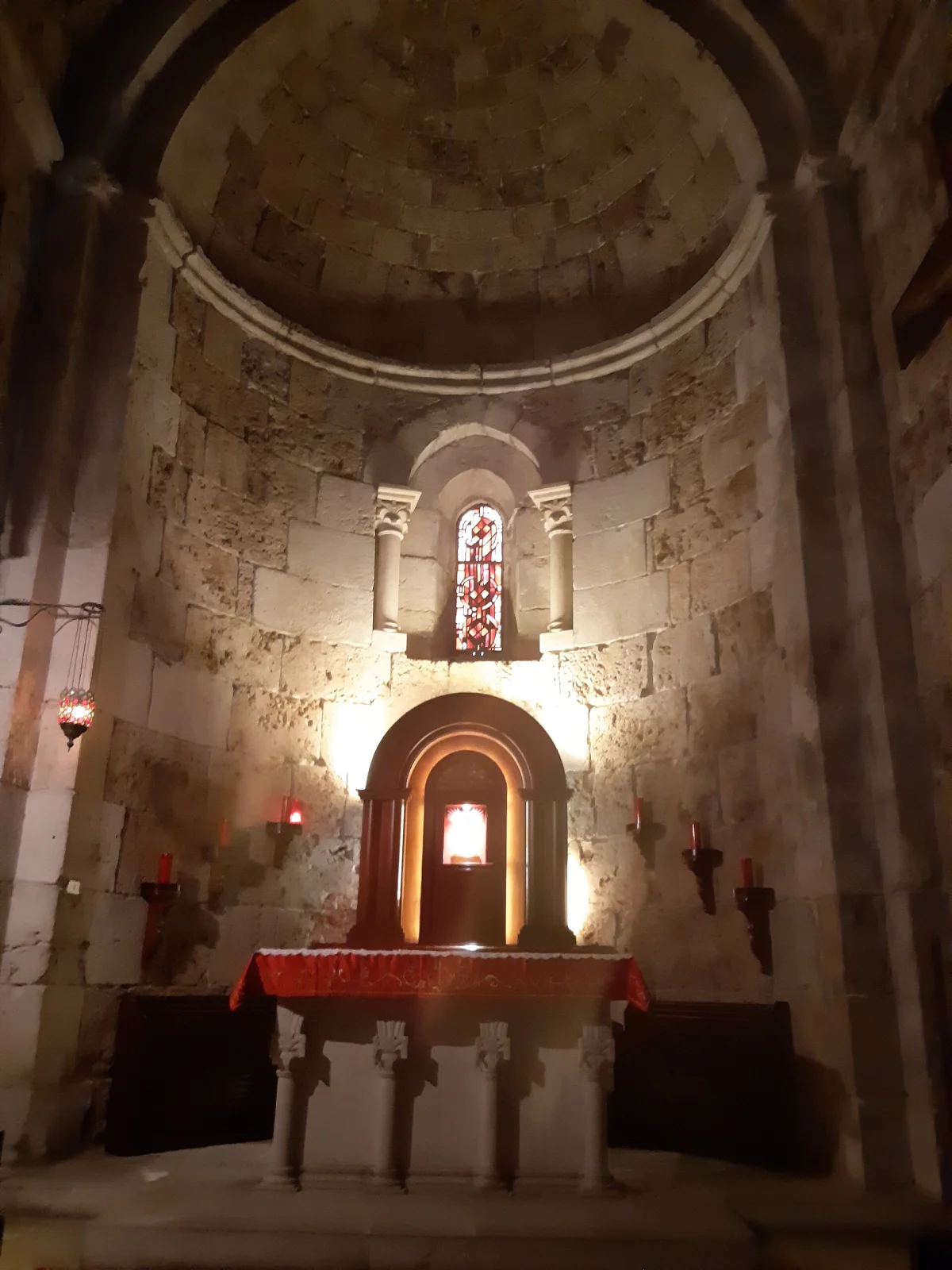
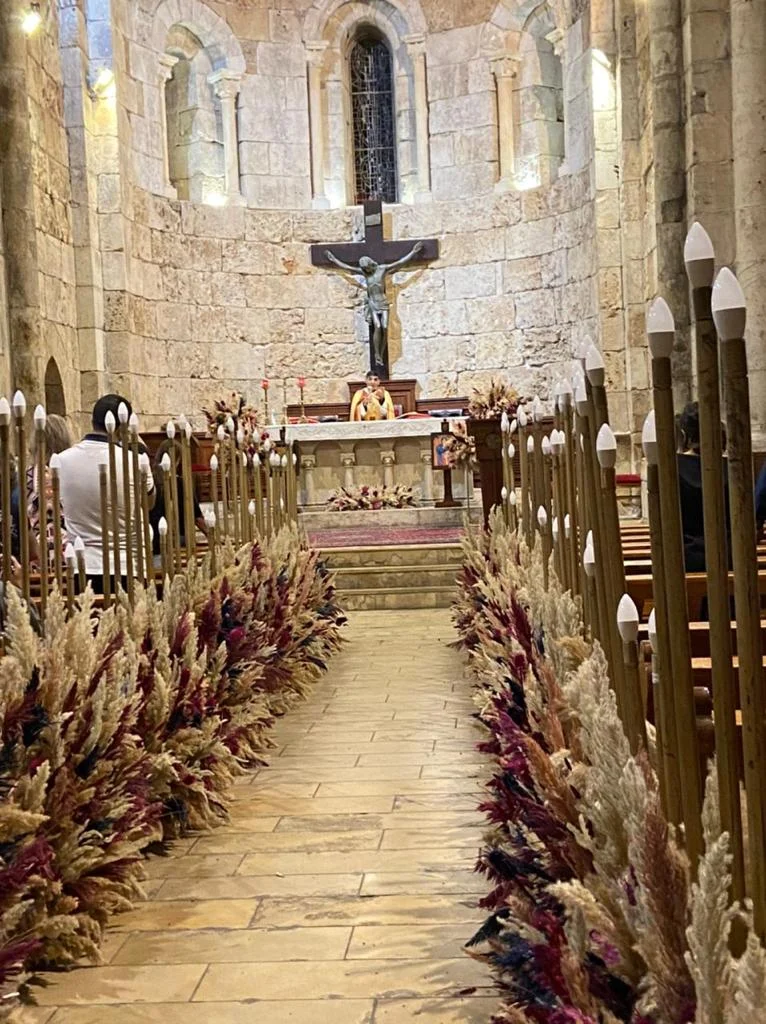
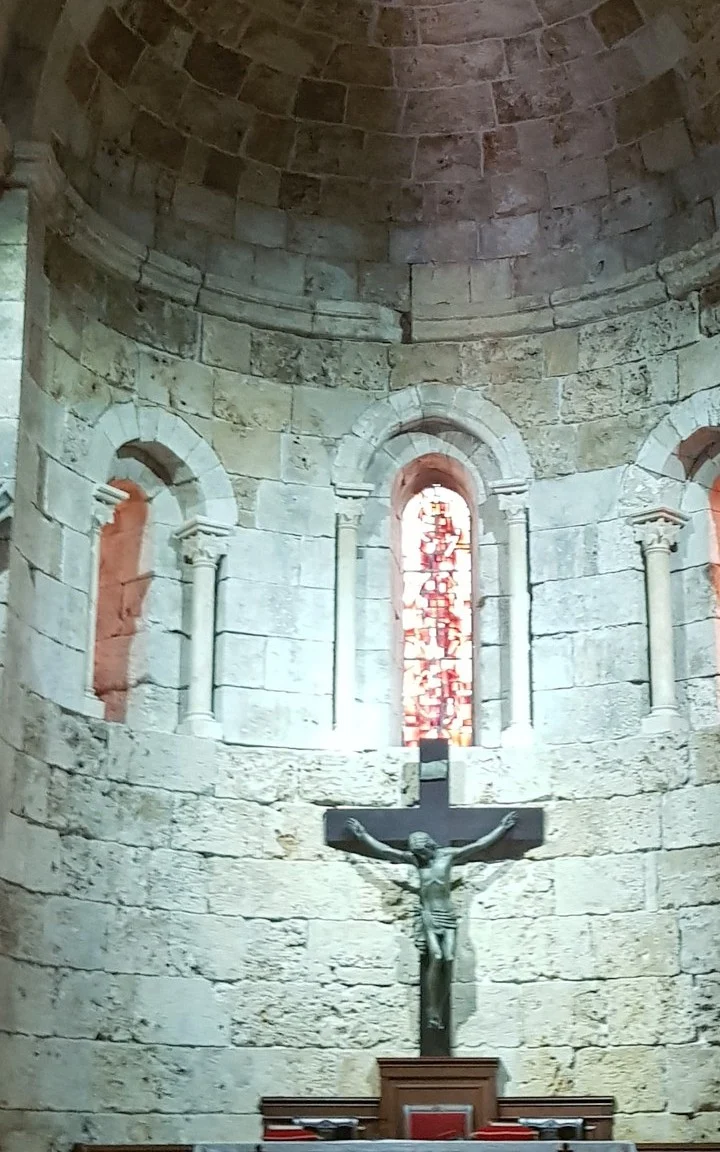
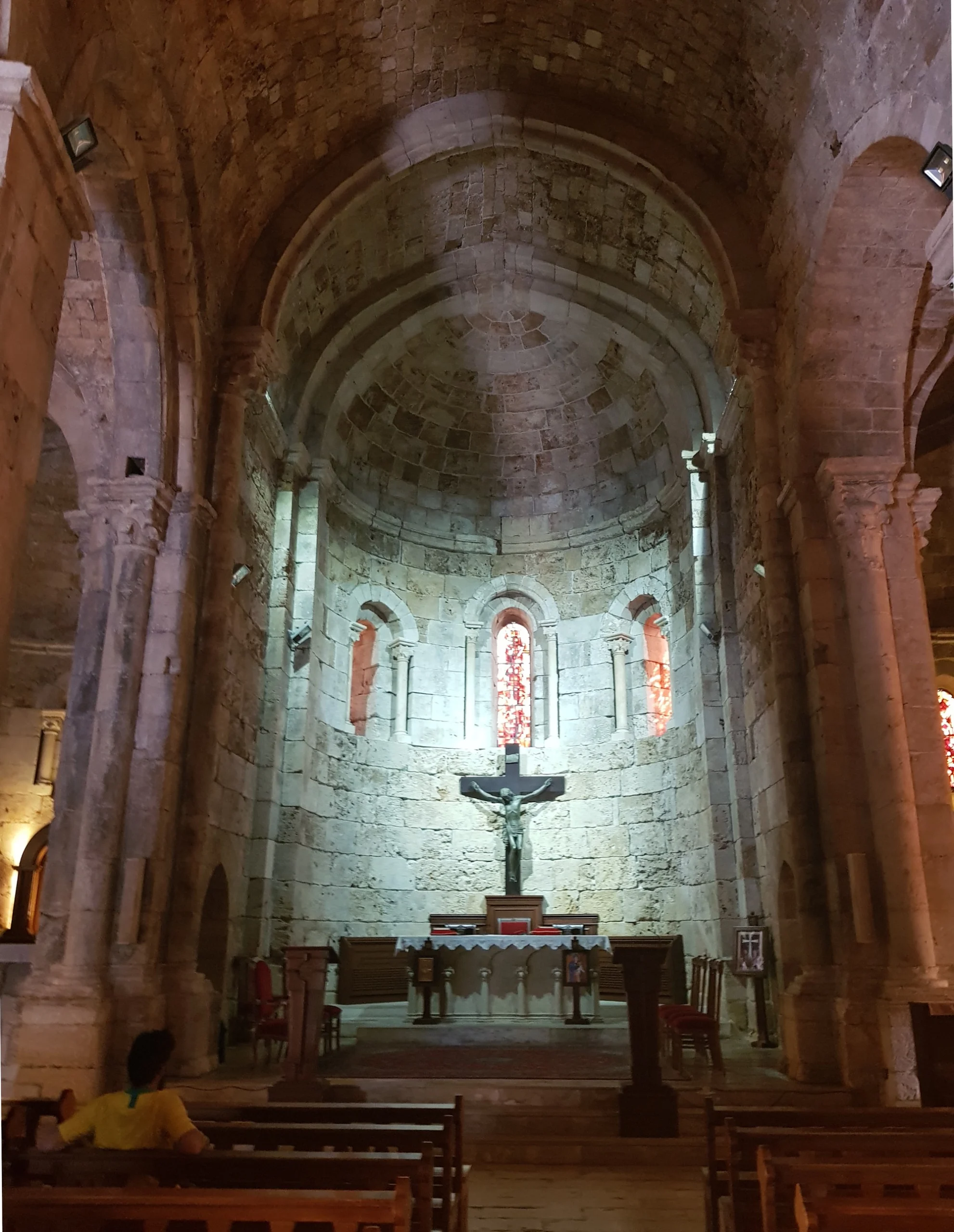
There was a need to replace the existing glass windows with colored ones, and Gabriel Loire, the French glass artist, was commissioned to oversee their reformation in a way that would make the glass colors as harmonious as possible with the prevailing light while using patterns compatible with the church’s structure. It is worth mentioning that he used both lead technique and thermal shaping in his work.
The making of the windows
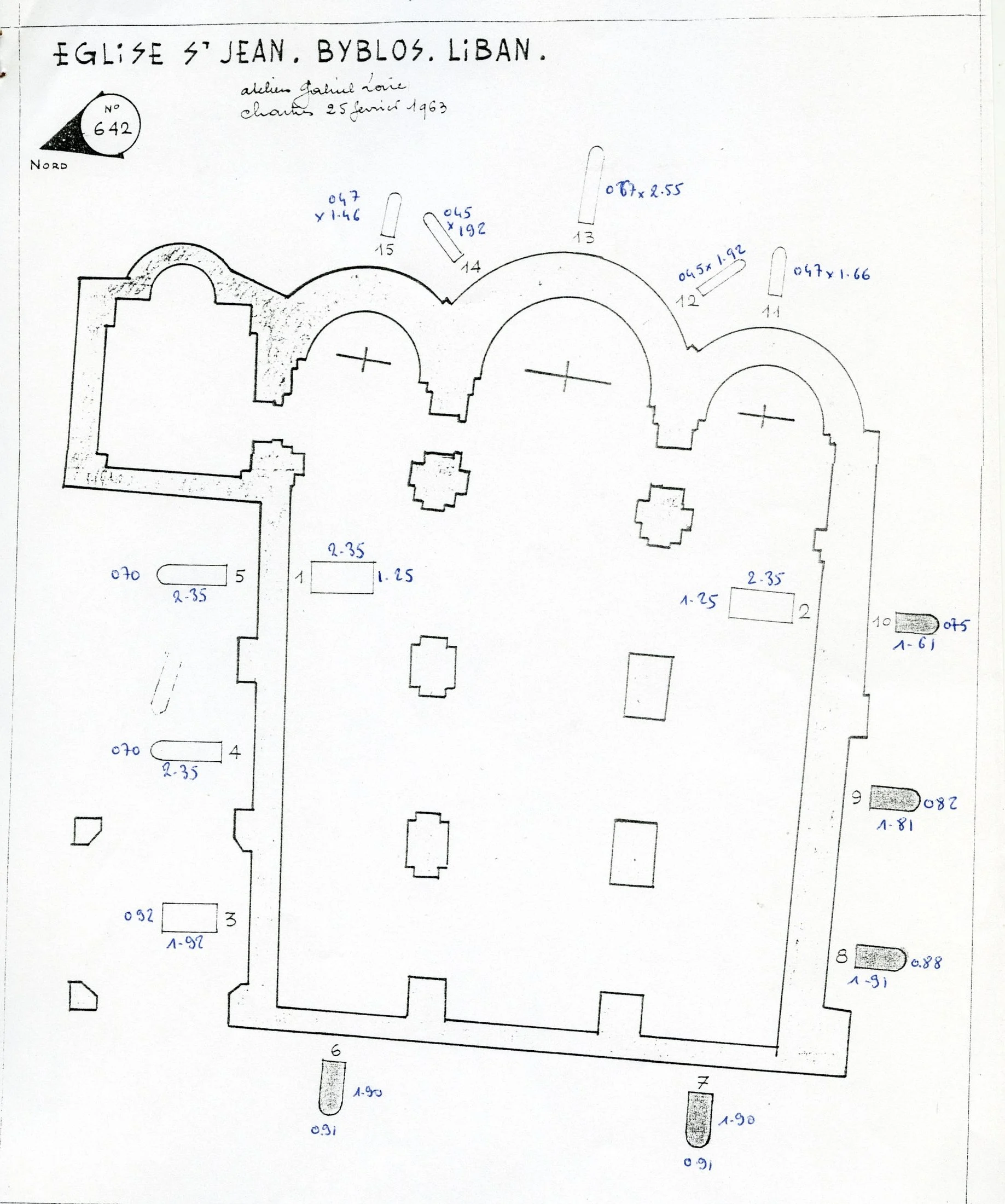
- 15 windows
- 24 m² of glass
- 1963
On his first journey to Lebanon, Gabriel Loire learned from the Directorate General of Antiquities that the church was to be restored. He went to Byblos and made his first sketches.
- 1965
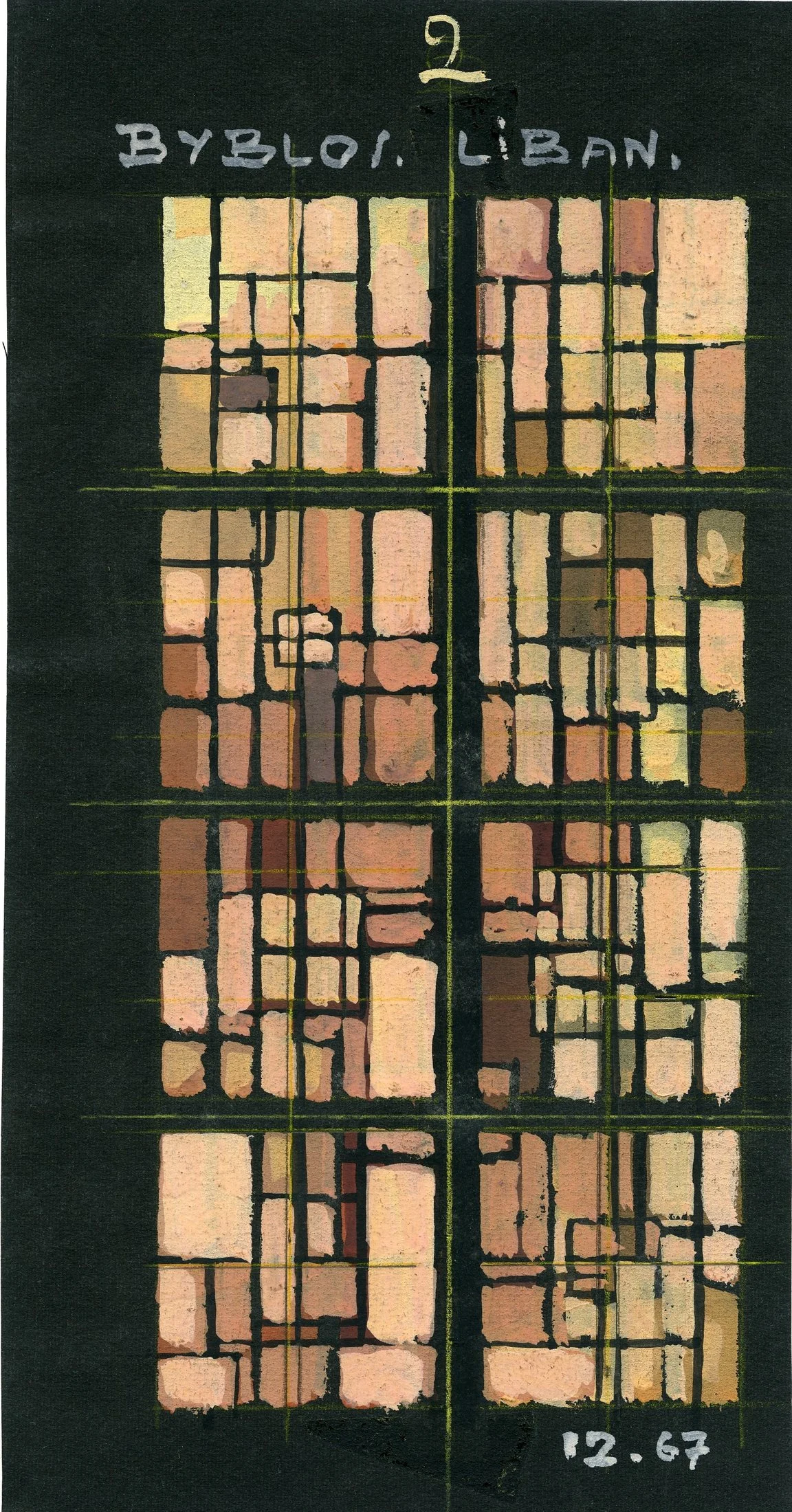
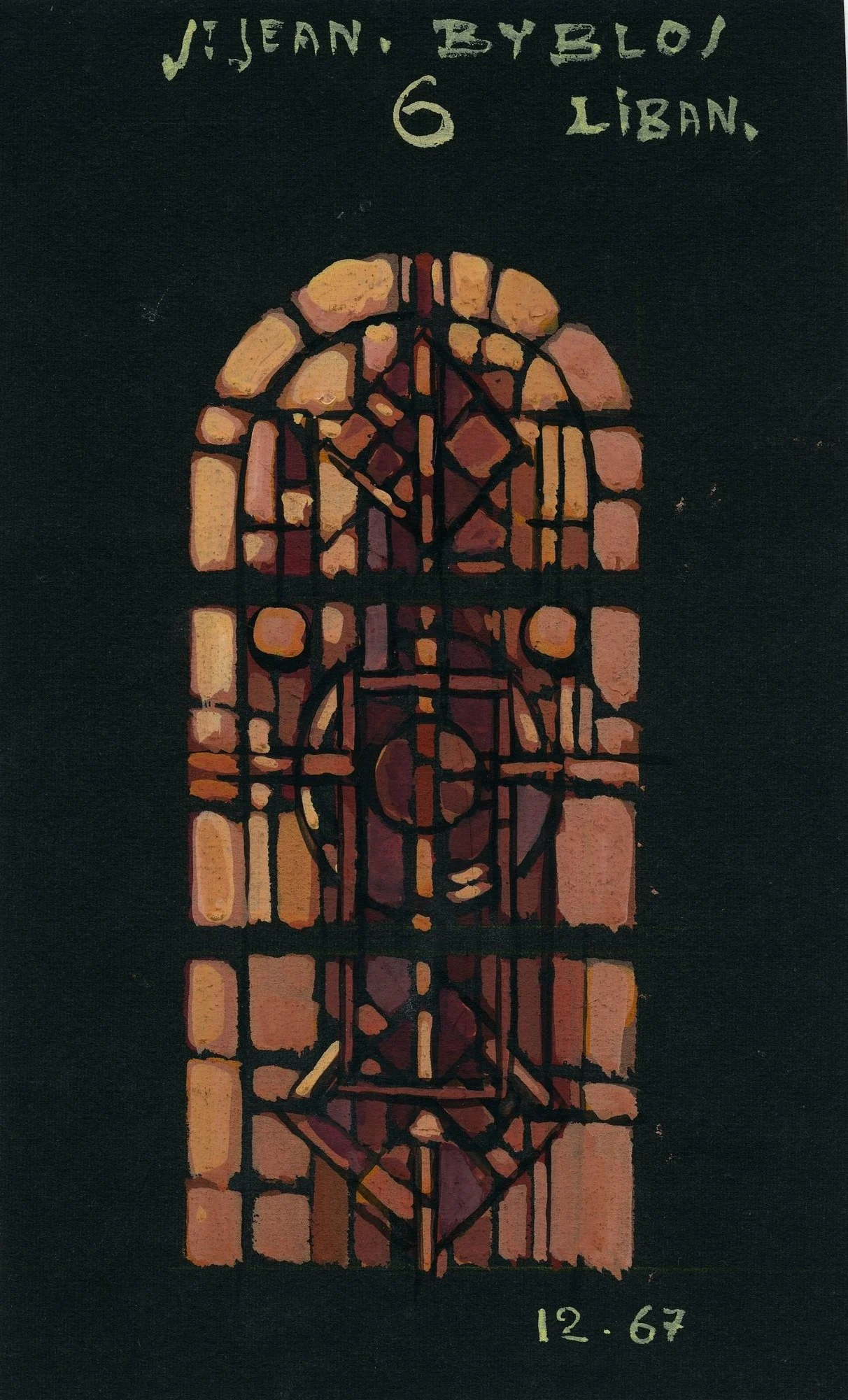
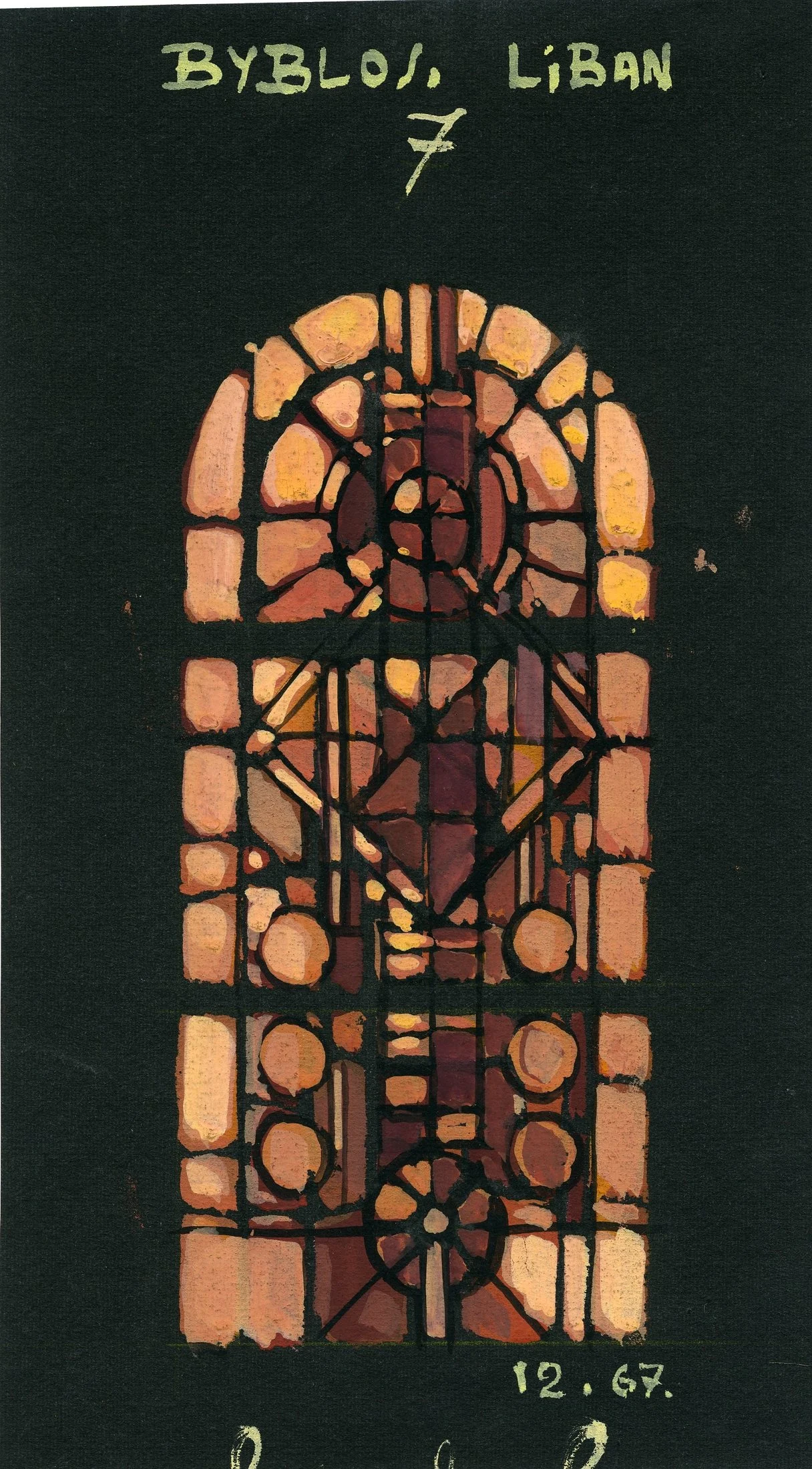
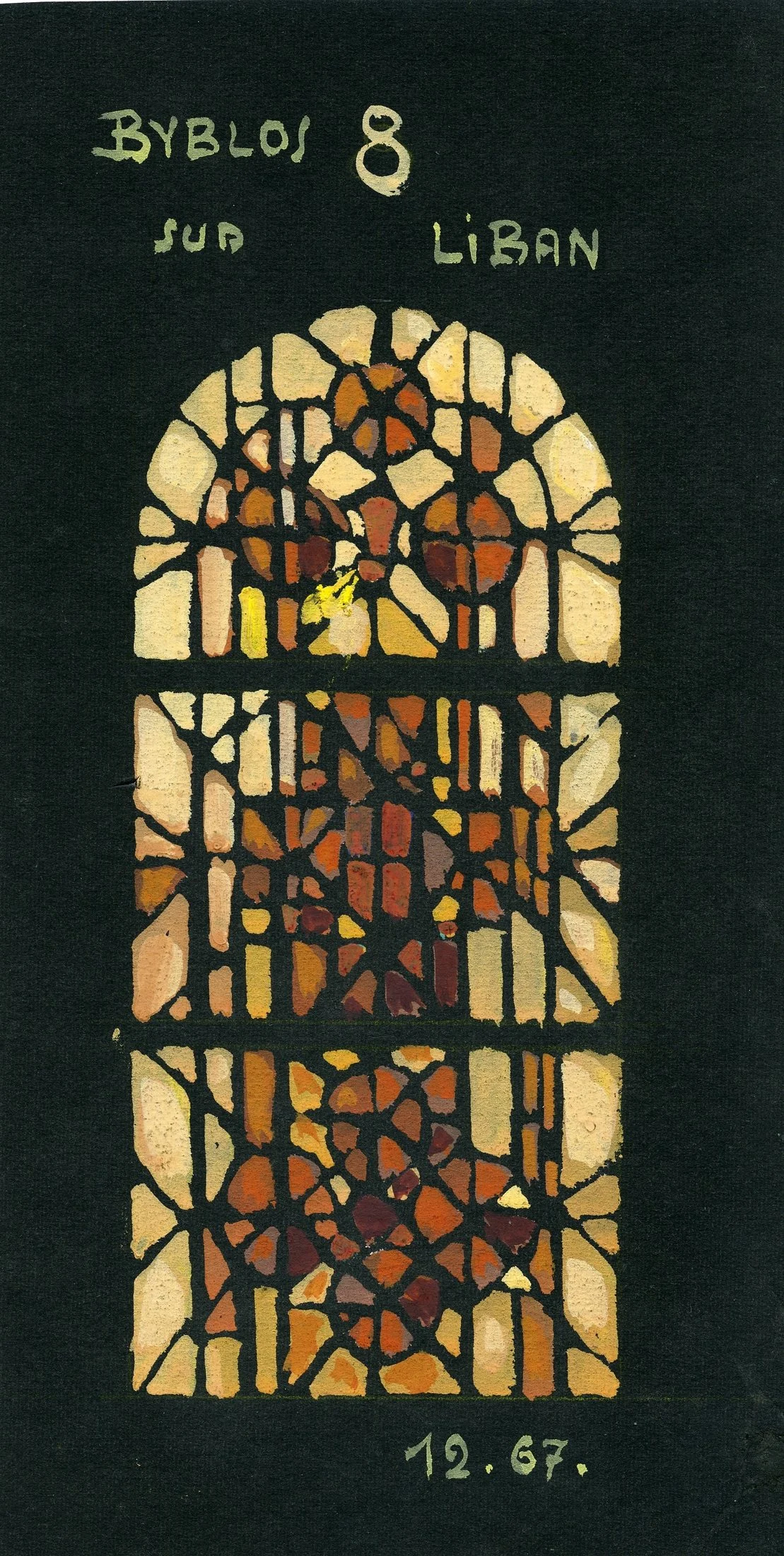
Back in Byblos, he drew a plan on the spot that already set the colouring of each window, light or dark according to where it stands in this Romanesque church of very small openings.
- 1967
In January, the work moved forward with the architect Camille Asmar of the Directorate General of Antiquities and the engineers Manasseh and Nicolas Bekhazi. The Saint-Just-sur-Loire glassworks made special glass for the church, thicker at the centre than at the edges, set in special leads.
- 1969
Made in Gabriel Loire’s workshop in Chartres, the windows sailed for Lebanon in April. In May they were unpacked at Byblos and set in place.
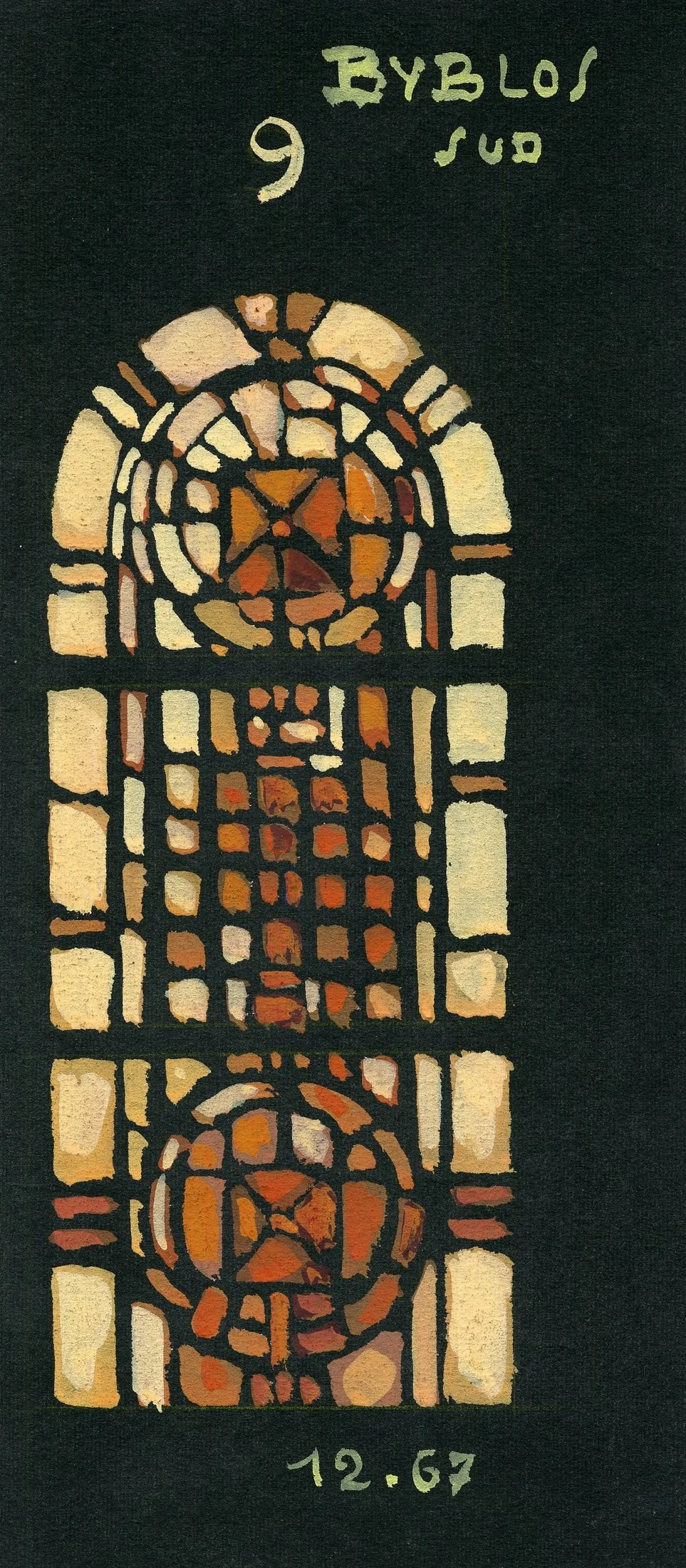
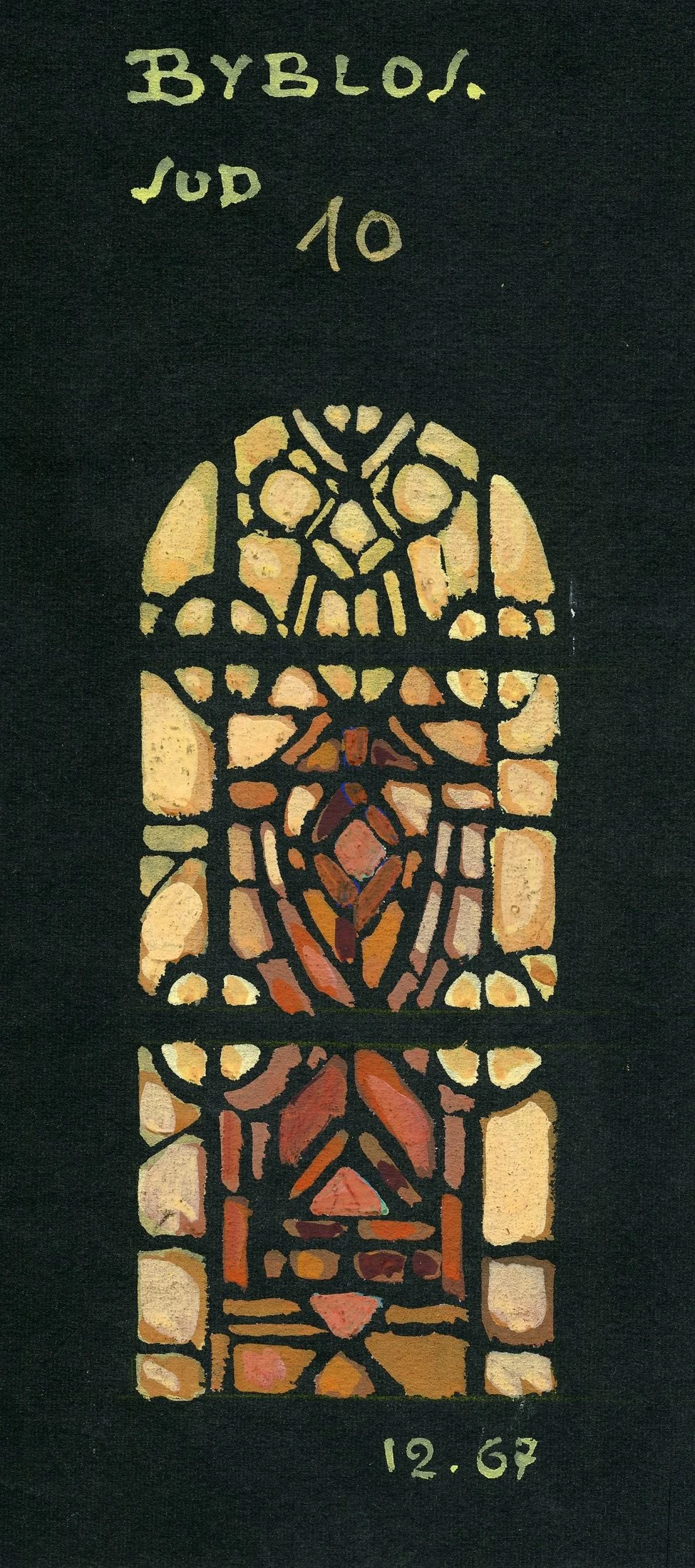
The designs, December 1967
“Almost geometric, but free and never monotonous.”
 Window 1
 Window 2
 Window 6
 Window 7
 Window 8
 Window 9
 Window 10
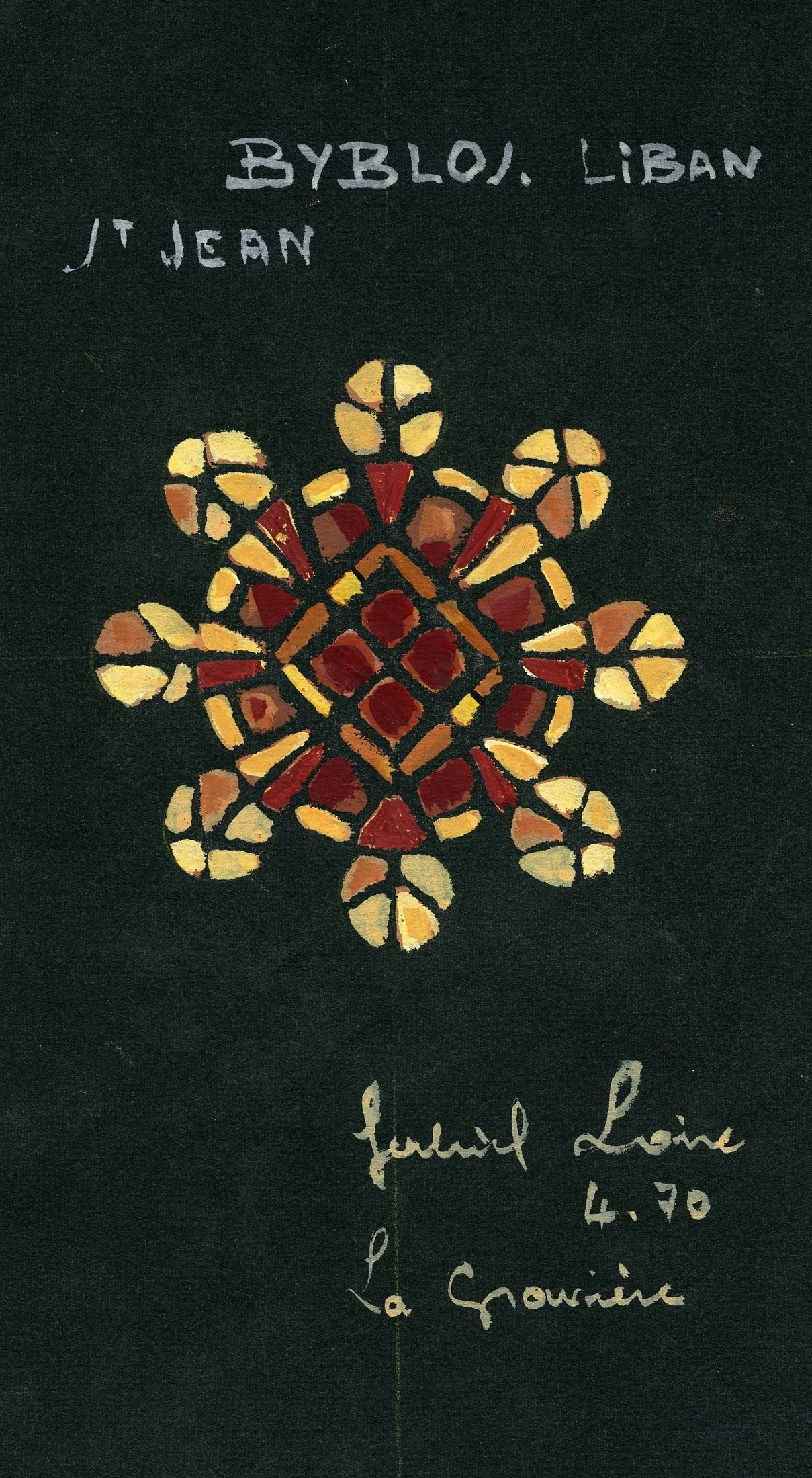
 Rose window
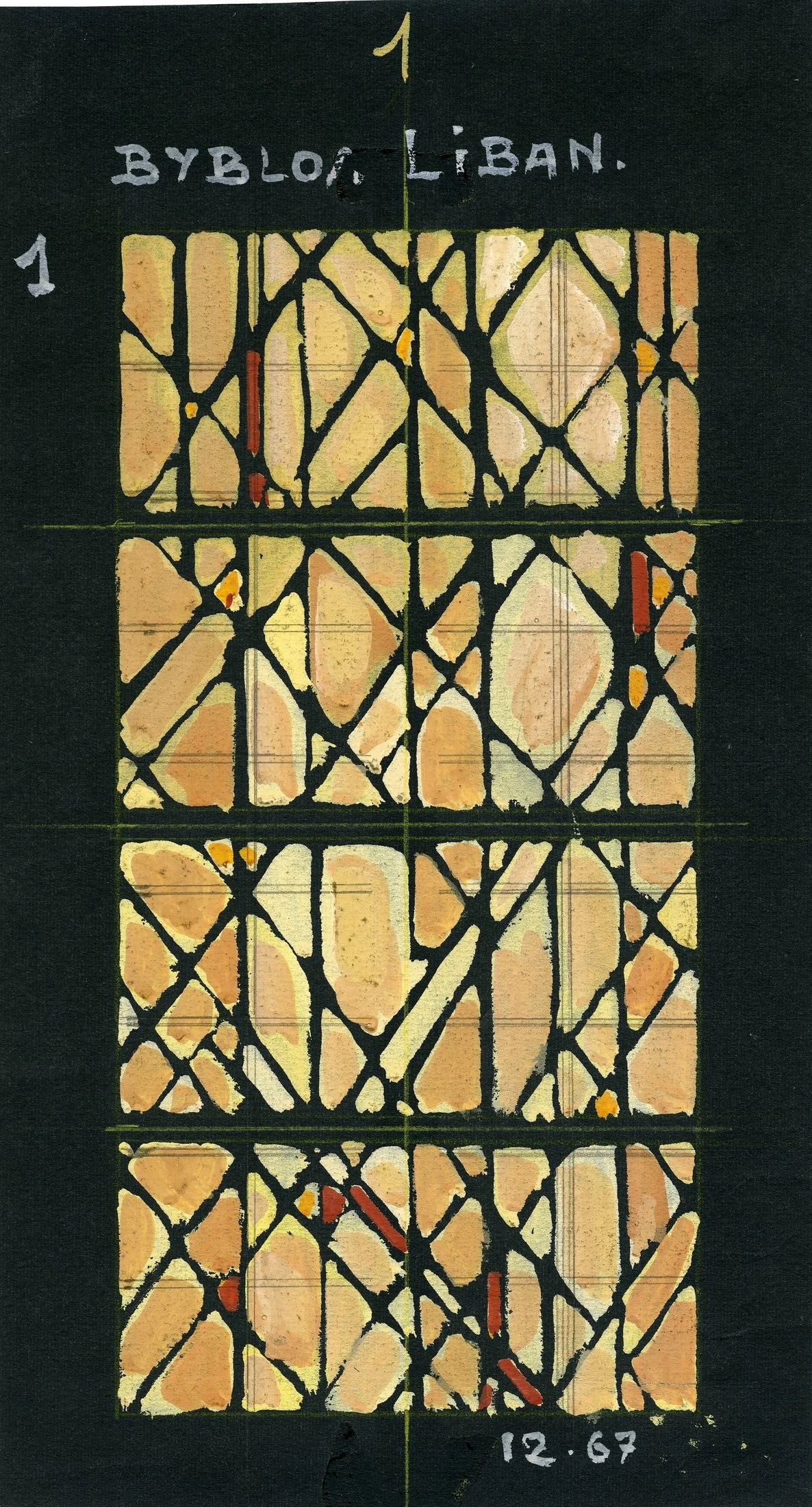
Source: Ateliers Loire, Chartres