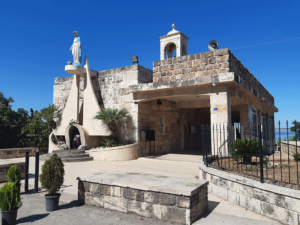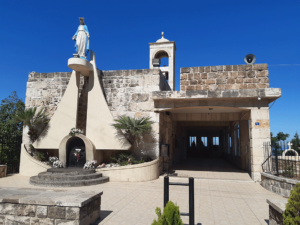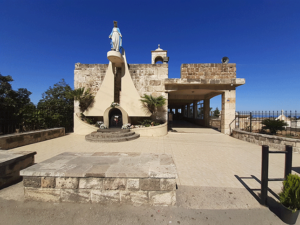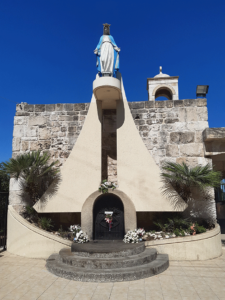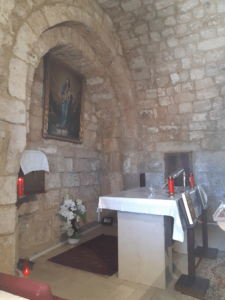

The Shrine and Church of Our Lady of the Seas
This shrine is known among the public as “Saydet Martine,” and according to some researchers, this name may have been confused with the renowned Byblos martyr, Aquilina. They built a temple in her memory on the outskirts of their city, which they used to frequent during the days of harvesting the silk cocoons. As for the title “Martine,” it is believed that the Franks bestowed it upon the shrine of the Virgin Mary, their patron and protector, as they traveled the seas on their way to conquests and wars. Since the city of Byblos has been a significant naval and commercial port since ancient times, one of its shrines came to be known as Our Lady of the Seas or “Saydet Martine”.
The few available documents in the archives of Antshit of St. John Mark – Byblos indicate that a church dedicated to Our Lady “Martine” existed in its current location south of the city. The Lebanese Maronite Order received it from Prince Youssef Chehab, along with the Church of St. John Mark and other shrines and churches in Byblos, in 1766. In 1780, Maronite Patriarch Mikhail Khazen issued an official decree entrusting the Lebanese monks with the service of this church.
As for the current church, its construction lasted for two years, and it was completed on April 11, 1876, as indicated by the marble plaque placed above the church’s door: “This blessed structure was built by Father Ghattas Al-Ma’adi, in April 1876.” Documents related to this church state that Father Al-Ma’adi purchased land for Our Lady Of The Seas and built shops adjacent to it in 1877 and 1878. It appears that the faithful, due to their deep attachment to the Mother of God, made steadfast vows towards her, which is confirmed by a letter from Patriarch Paul Massad addressed to the head of Antshit of St. John Mark in 1888, ordering those who failed to fulfill their vows to do so.
Over time, due to the church’s proximity to the main road, the number of believers visiting it increased, especially among car drivers and their companions, who came to pray, seek blessings, and participate in the divine liturgy. This is in addition to the residents who diligently fulfill their religious duties in the church on Sundays and holidays, considering it their parish church. Furthermore, a large section of Byblos’ cemeteries is located near the church, leading to numerous funeral ceremonies and burials of city residents. The resident Lebanese monks in Antshit of St. John Mark provide pastoral services at Our Lady of the seas, celebrating the divine liturgy there every Saturday, in addition to major religious holidays. The people of Byblos honor Our Lady Of The Seas on the feast days of the Virgin Mary in general, and particularly on the day of her assumption on August 15th each year.